Employment Classification & Documentation
We assist organizations in reviewing administrative processes associated with employee classifications, job descriptions, employment documentation, and workforce records.
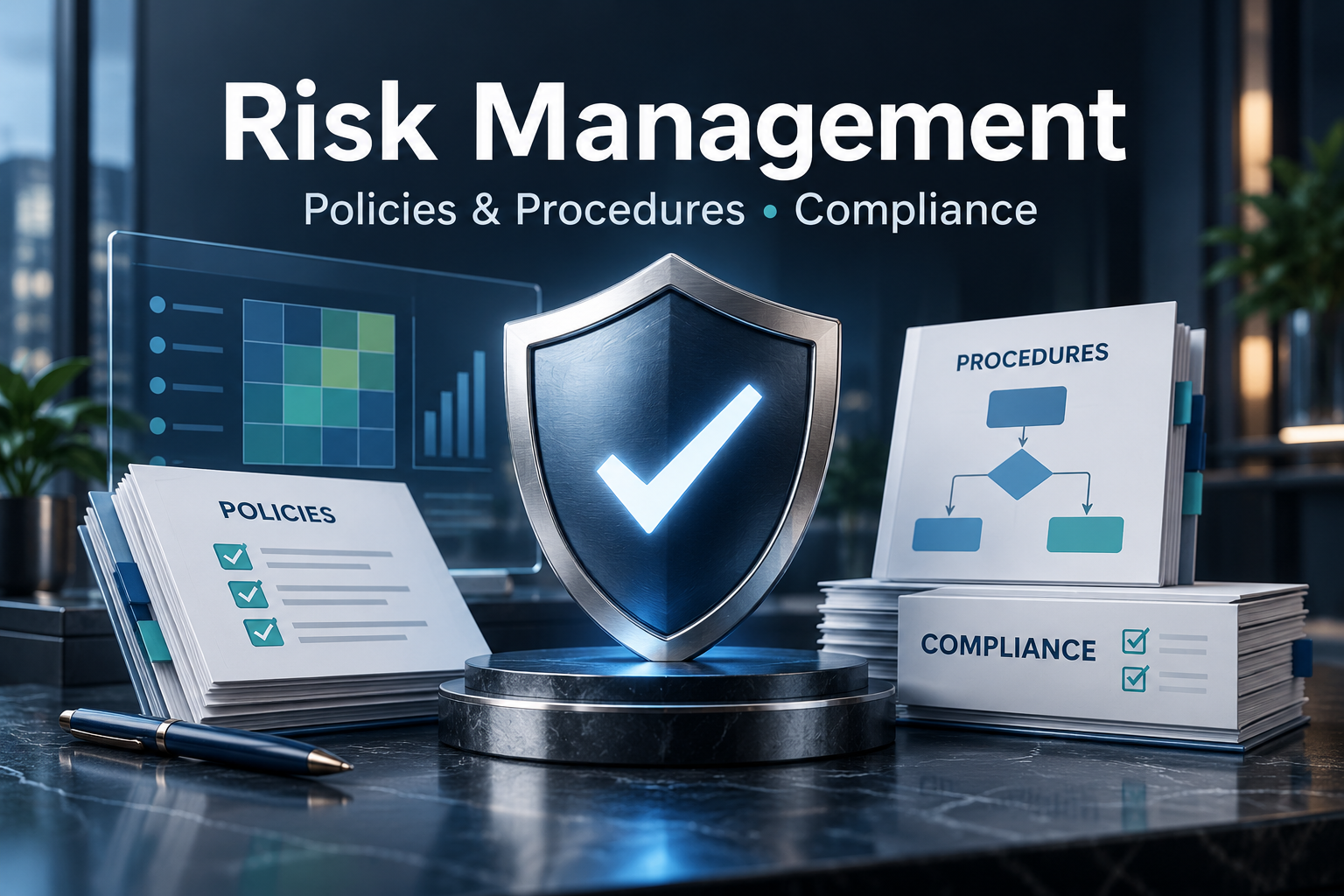
Risk Management
Identify, assess, and reduce operational risk. From enterprise risk management and clear policies and procedures to operational compliance, we help protect your people, your business, and your bottom line.

Human resources compliance involves a wide range of responsibilities that can change as an organization grows, enters new markets, hires additional employees, or modifies its workforce structure.
Employment classifications, wage and hour requirements, workplace safety, employee records, leave administration, anti-discrimination policies, and employee privacy all require appropriate consideration.
For many businesses, the challenge is not simply understanding that these obligations exist. It is establishing practical procedures to manage them consistently.
Spectre One Management helps organizations evaluate their HR processes, identify potential administrative gaps, and develop structured approaches to workforce compliance.
We work alongside business leadership and, where appropriate, qualified HR, payroll, and legal professionals to help translate compliance requirements into workable operational practices.
| Business category | Common compliance issues | Potential financial exposure |
|---|---|---|
| Startups (1–19 employees) | Worker misclassification, payroll errors, missing policies, improper onboarding, overtime | $5,000–$50,000+ |
| Small businesses (20–499 employees) | Wage disputes, discrimination complaints, leave violations, recordkeeping, employee termination | $15,000–$150,000+ |
| Enterprise (500+ employees) | Systemic discrimination, multi-state compliance, collective wage claims, inconsistent HR practices | $100,000–$1 million+ |
Financial ranges are illustrative planning scenarios, not published industry averages. Actual exposure depends on the violation, workforce size, jurisdiction, duration, and whether litigation occurs. Enterprise cases can substantially exceed these ranges.
Employment regulations can involve federal, state, and local requirements, and the rules applicable to one organization may differ significantly from those applicable to another.
Requirements may also vary based on employee headcount, industry, work location, employee classification, and the nature of the business.
For example, a company operating in multiple states may encounter different wage requirements, paid leave obligations, payroll procedures, and employee notification standards.
Without appropriate administrative controls, inconsistencies can develop between company policies and actual workforce practices.
We assist organizations in reviewing administrative processes associated with employee classifications, job descriptions, employment documentation, and workforce records.
We evaluate the processes used to track employee hours, authorize overtime, communicate schedules, and coordinate payroll information.
We help organizations review the operational application of workplace policies and coordinate updates with qualified legal or HR advisers when necessary.
We assist with establishing clear internal procedures for reporting workplace concerns, documenting issues, assigning responsibilities, and coordinating appropriate responses.
We evaluate the processes used to manage employee leave requests, attendance records, approval workflows, and supporting documentation.
Personnel records may contain sensitive personal information. We help organizations consider appropriate administrative safeguards, access restrictions, retention practices, and secure information-handling procedures.
We help develop processes for communicating policies, documenting employee acknowledgment, and coordinating required or recommended workplace training.
We review existing administrative practices to identify inconsistencies, incomplete documentation, unclear responsibilities, and areas requiring specialized compliance review.
Workforce management practices can influence employee engagement, retention, and organizational performance.
Clear expectations, consistent management practices, and effective communication provide an important foundation for employee confidence.
Compliance alone does not create an engaged workforce. However, inconsistent application of policies or unclear employee responsibilities can undermine trust and create unnecessary operational challenges.
Clear expectations, consistent management practices, and effective communication provide an important foundation for employee confidence.
The following are documented U.S. enforcement figures and industry benchmarks.
Employment discrimination charges resolved nationally
Pre-litigation monetary relief secured
Federal compliance actions concluded
Recovered for 176,957 employees
We begin with understanding how your organization currently manages workforce responsibilities.
We identify where administrative processes may need clarification, additional documentation, improved oversight, or coordination with specialists.
The objective is to help your organization move from reactive problem-solving toward a more structured approach to managing employment-related responsibilities.
We do not replace employment counsel or provide legal determinations. Our role is to support operational assessments, administrative controls, documentation, and implementation.
Establishing consistent HR practices can help management address workforce responsibilities before administrative gaps become larger business problems.